
Mohs Micrographic Surgery
Preparing for your Mohs surgery.
A little planning makes the day easier. These are our full preparation instructions for skin surgery — including extra steps for surgery on the leg.
Surgery on the leg
Extra preparation for surgery on the leg
We will prescribe mupirocin ointment for you to use twice a day inside your nostrils for 5 days leading up to the surgery date. This cuts down on the possibility of a Staphylococcal bacterial infection after surgery, because people can carry Staphylococcus inside their nostrils.
You will also need to cleanse your whole body with Hibiclens soap (available over the counter) for the 5 days leading up to surgery and the morning of surgery. Please especially scrub all the folds of your skin — armpits, groin, under the breasts and stomach, and even between your toes.
- For after the surgery, please purchase:
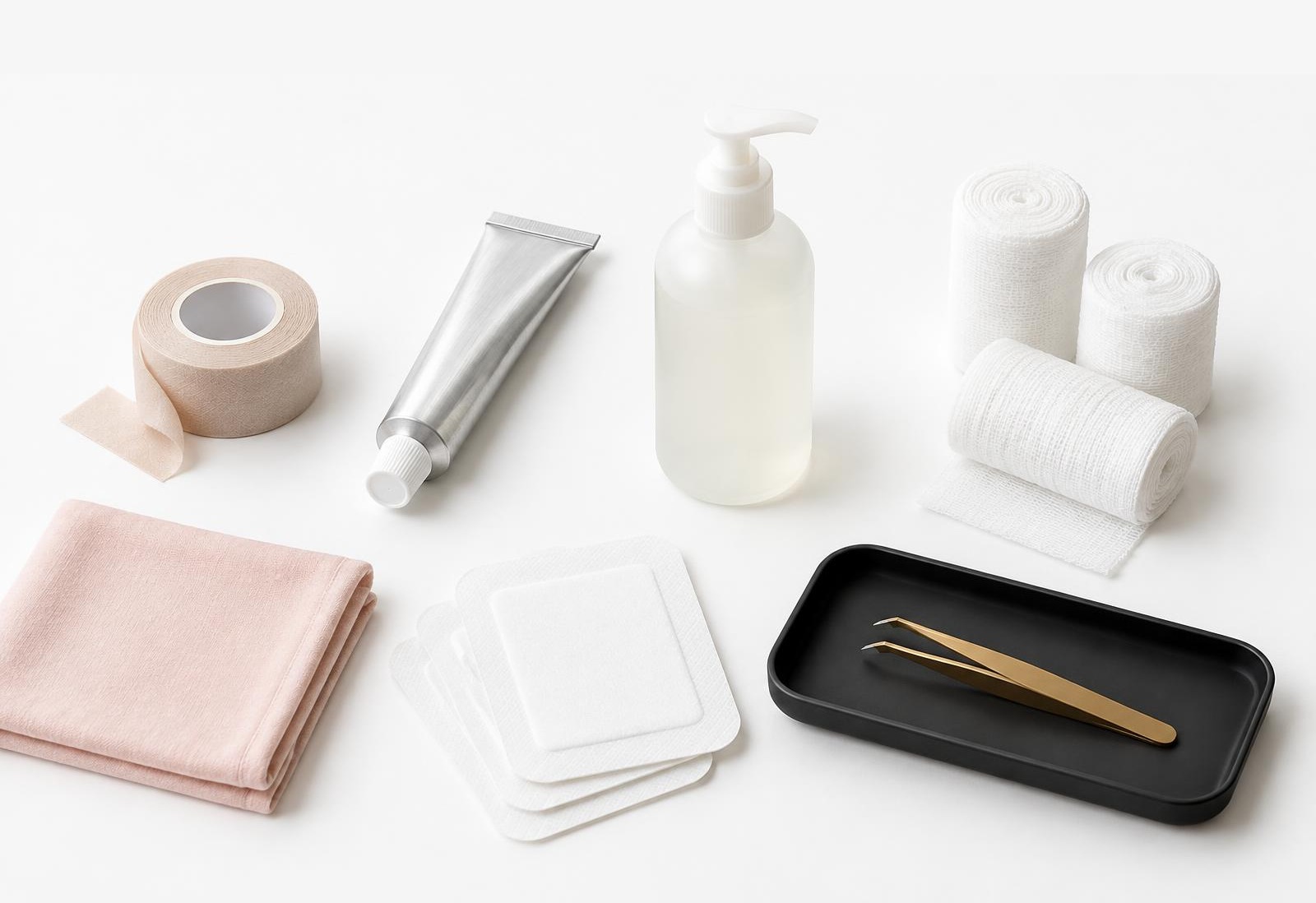
- A compression stocking, 20–30 mmHg (available at medical supply stores or online — ask the pharmacist for help if you cannot find it; make sure it is 20–30 mmHg)
- Non-stick pads (Curad or Telfa brand are good ones) — buy the ones that are about the size of an iPhone
- Coban wrap — a wrap to put over the non-stick pads that sticks to itself
Two weeks before
Medications, supplements and bleeding
Many medications, both prescription and non-prescription, can inhibit the blood's ability to clot and may increase the tendency to bleed during surgery and the post-operative period. Many of these are anti-arthritic, anti-rheumatoid, anticoagulant or circulation medications, and most contain aspirin or ibuprofen.
Please contact your primary physician prior to discontinuing any prescription or over-the-counter doctor-ordered medication (for example Coumadin or aspirin). Inform your doctor of your scheduled surgery and ask if and when to stop the medication — they may also tell you when to resume it after surgery.
If you take any vitamins or supplements (fish oil, garlic, and so on) or non-prescription medications that were not ordered by a doctor — aspirin or other over-the-counter anti-inflammatory medications — that may increase your tendency to bleed, we would like you to discontinue them 2 weeks prior to your surgery.
The following is a list of common medications that increase your tendency to bleed. It is not exhaustive, so ask us about anything you take.
- Advil (Ibuprofen)
- Alcohol
- Aleve (naproxen)
- Alka Seltzer
- Anacin
- Anaprox (naproxen)
- Ascriptin
- Aspirin
- B.A.C. (butalbital / aspirin / caffeine)
- Buffer Cataflam (diclofenac / potassium)
- Children's Aspirin
- Clinoril (sulindac)
- Cogesprin
- Coumadin (warfarin)
- Daypro (oxaprozin)
- Diorinal (butalbital / aspirin / caffeine)
- Disalcid (salsalate)
- Doan's Pills
- Dolene (propoxyphene / aspirin / caffeine)
- Dolobid (diflunisal)
- Doraphen Compound (propoxyphene / aspirin / caffeine)
- Doxaphene Compound (propoxyphene / aspirin / caffeine)
- Dristan
- Easprin
- Ecotrin
- Empirin
- Excedrin
- Feldene (piroxicam)
- Fiorinal (butalbital / aspirin / caffeine)
- Fiortal Caps (butalbital / aspirin / caffeine)
- Four-Way Cold Tabs
- Halfprin (aspirin)
- Ibuprofen
- Indocin (indomethacin)
- Iodine (etodolac)
- Isollyl Improved (butalbital / aspirin / caffeine)
- Lortab ASA (hydrocodone / aspirin)
- Marnal (butalbital / aspirin / caffeine)
- Meclome (meclofenamate)
- Medipren (ibuprofen)
- Midol
- Mono-Gesic (salsalate)
- Motrin (ibuprofen)
- Nalfon (fenoprofen)
- Naprelan (naproxen)
- Naprosyn (naproxen)
- Norgesic (orphenadrine / aspirin / caffeine)
- Nuprin (ibuprofen)
- Ordis (ketoprofen)
- Oruvail (ketoprofen)
- Pamprin IB (ibuprofen)
- Panwarfin (warfarin)
- Percodan (oxycodone / aspirin)
- Percodan-Demi (oxycodone / aspirin)
- Persantine (dipyridamole)
- Plavix Tabs (clopidogrel bisulfate)
- Ponstel (mefenamic acid)
- Relafen (nabumetone)
- Robaxisal (aspirin / methocarbamol)
- Roxiprin (oxycodone / aspirin)
- Salflex (salsalate)
- Sine Aid
- Sine Off
- Soma Compound (aspirin / carisoprodol)
- Talwin Compound (aspirin / pentazocine)
- Tegretol (carbamazepine)
- Ticlid (ticlopidine)
- Tolectin (tolmetin)
- Toradol (ketorolac)
- Trental (pentoxifylline)
- Trigesic (acetaminophen / aspirin / caffeine)
- Trilisate (choline / magnesium / trisalicylate)
- Vanquish (butalbital / aspirin / caffeine)
- Vitamin E Supplements
- Voltaren (diclofenac)
- Warfarin
- Zorprin (aspirin)
Day before surgery
Shower, eat and plan your day
- Please shower and eat before your surgery.
- Do not drink any alcoholic beverages for 12 hours prior to surgery — alcohol causes blood vessels to dilate and could aggravate bleeding problems.
- It is a good idea to bring a laptop, book or magazine on the day of surgery. General excisions typically take about an hour. The Mohs procedure may take a full day, much of which you will spend in the waiting room while your removed tissue is processed in our laboratory and examined under the microscope in our Mohs lab.
- Please note that you may need someone to drive you home from the procedure, depending on the location of the lesion (for example, near the eye) and medications that might be required.
The day of surgery
What happens when you arrive
When you arrive for surgery, the surgical assistant will take you to the surgery suite and prepare the involved area of skin. If you have any additional questions, feel free to ask them — the surgeon will also see you at this time and review your case.
The area of skin containing the cancer is then anesthetized with a local anesthetic, which usually takes a few minutes. The surgeon removes the cancerous area, and the bleeding is stopped with a cauterizing machine, which generates heat. Before you leave the surgical suite, the assistant will cover your wound with a bandage, and the tissue is sent to the laboratory for examination.
It takes approximately two to three hours to prepare the tissue for microscopic examination. If the examination reveals that your tissue still contains cancer cells, the procedure is repeated. Several excisions and microscopic exams may be done in one day, and it is seldom necessary to return the following day for additional surgery. The average number of surgical sessions for most skin cancers is two to three.
The surgical wound
How the wound is treated
When the skin cancer has been completely removed, we decide on the best method for treating the wound: closing it directly with stitches (sutures), letting it heal by itself (granulation), or closing it with a skin graft or flap. We will recommend the best method for your individual case. Repairs may be completed by us or by other surgical specialists — every patient is unique and we individualize your treatment to achieve the best results.
You may experience a sensation of tightness or drawing as the wound heals — this is normal, and you will feel it less and less as time progresses. On occasion, skin cancers involve nerves, and it may be one or two years before your sensation returns to normal; in some cases the numbness may be permanent.
Any form of surgery leaves a scar, and the Mohs procedure tends to minimize this as much as possible by removing only the tissue involved with cancer. The new skin that grows over the wound may contain many more blood vessels than the skin that was removed, which results in a red scar that may be sensitive to temperature changes. This sensitivity improves with time and the redness gradually fades — if you are having a lot of discomfort, avoid extreme temperatures. You may also experience itching after the wound heals, because the new skin does not contain as many oil glands; petroleum jelly will help relieve it.
- Items needed for wound care:
- Aquaphor, or a new container of Vaseline
- Telfa non-stick dressing
- Paper tape
- Q-tips
- A gentle liquid cleanser such as Vanicream, CeraVe or Cetaphil
This page is general education and is not medical advice, diagnosis or treatment, and it does not create a physician–patient relationship. Individual circumstances differ; please discuss your own skin with a qualified clinician. If you are having a medical emergency, call 911.
Questions
Frequently asked
Do not stop a prescribed blood thinner without instruction. Contact your primary physician prior to discontinuing any prescription or doctor-ordered medication, and ask if and when to stop and resume it. Call our office with your medication list and we will advise you.
Usually yes, because surgery is performed under local anesthetic. You may need someone to drive you home depending on the location of the lesion (for example, near the eye) and medications that might be required.
Yes, and you should. Please shower and eat before your surgery, and bring food for the day.
Cleansing your whole body with Hibiclens for 5 days before surgery — and the morning of — greatly reduces the bacteria on your skin, including Staphylococcus carried in the nostrils, which lowers the chance of infection after surgery.

Questions before or after surgery? Call us.
Whether something has changed, something has been bothering you for years, or you simply want expert guidance on keeping your skin healthy, we’re here to help.