
Medical Dermatology
Treating warts without wearing out your patience.
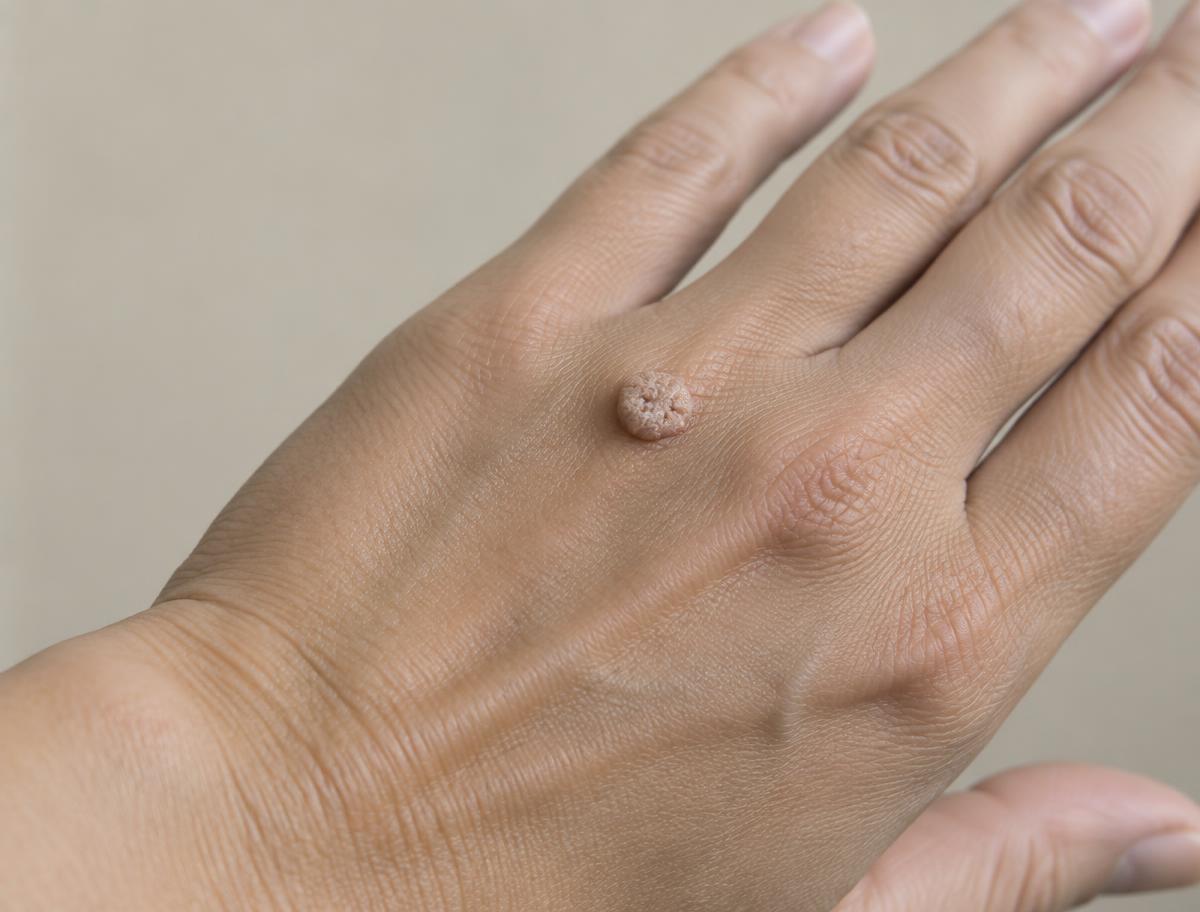
Warts are a viral skin infection. Most eventually clear, but treatment shortens the process, limits spread and prevents one wart from becoming a dozen.
Overview
Understanding warts
Warts are caused by human papillomavirus infecting the top layer of skin. They are common in children, teenagers and adults, and spread through direct contact and through shared damp surfaces such as locker room floors.
Different sites behave differently. Warts on the hands and around nails often respond well to office treatment. Plantar warts on weight-bearing soles are thicker and more stubborn. Flat warts on the face need a gentler approach to avoid scarring.
There is no single treatment that clears every wart on the first visit, so a plan usually combines in-office treatment with something you do at home between visits.
Signs
What you might notice
- Rough, firm bumps on hands, fingers or around nails
- Thickened, tender areas on the soles that hurt with pressure
- Small black dots within the lesion, which are clotted vessels
- Numerous small flat bumps on the face or legs
- Lesions spreading to nearby skin over time
Care
How we treat it
Cryotherapy. Controlled freezing with liquid nitrogen in the office, usually repeated every two to four weeks.
Topical therapy. Prescription and over-the-counter options, including salicylic acid preparations and immune-modulating or blistering agents for selected sites.
Procedural options. Curettage, electrosurgery or intralesional injection for resistant warts, chosen with the site and scarring risk in mind.
Immune-directed approaches. Treatments that recruit your own immune response, which can be useful when warts are numerous or recurrent.
Evaluation
How it’s diagnosed
Warts are diagnosed by examination, occasionally with the help of a dermatoscope. Paring the surface can confirm the diagnosis by revealing characteristic pinpoint vessels.
Any growth that is unusual in appearance, bleeding, changing or not responding as expected should be reevaluated, and a biopsy may be recommended to be certain of what it is.
This page is general education and is not medical advice, diagnosis or treatment, and it does not create a physician–patient relationship. Individual circumstances differ; please discuss your own skin with a qualified clinician. If you are having a medical emergency, call 911.
Questions
Frequently asked
It varies. Hand warts often clear in two to four freezing sessions; plantar warts can take longer. We will reassess at each visit and change approach if something is not working.
Yes, through direct contact and damp shared surfaces. Covering warts, not sharing towels or files, and wearing footwear in locker rooms reduces spread.
Treatment of warts is a medical service and is generally billed to insurance, subject to your plan's benefits.

Let’s take care of your skin.
Whether something has changed, something has been bothering you for years, or you simply want expert guidance on keeping your skin healthy, we’re here to help.